
Your Gps for Trust Administration and Setting to No-tolls
| Citation | Vol. 38 No. 2 |
| Year | 2026 |


BY RACHEL E. CARR AND ALIECIA BORES
These days, drivers can't function with- out their GPS or Waze navigation. Why? Unanticipated traffic, constant road ren- ovations, or if you live in Charleston— afternoon tide flooding may affect your route. Even knowing the general direc- tion, setting GPS saves time and stress. A trust document provides the route for trust administration, but trustees need more than going from Point A to Point B. Clear, navigable trust terms are like the Waze app of trust law—they work to anticipate obstacles, reroute the trustee when there is confusion, and ensure that the grantor's intent is reached without unnecessary tolls or detours.
This article explains why trust language matters and provides a road map for well-structured trusts that reduce administration roadblocks. It also highlights certain trust provisions that deserve practical review before documents are finalized. Let's face it: trust law is complex and intimidating. It involves intricate legal concepts, tax implications, and significant financial stakes, -all «f -which increase liability for the drafter. Intuitively, estate planning and trust administration are co-existing practice areas—but in reality, the firm dial drafts a trust is not usually the one that administers it.[1] When a new firm or trust company steps in to interpret trust terms, clarity becomes critical and navigable terms are essential to achieving the grantor's intent.[2]
Mapping the Estate Plan
Effective estate planning positions the administrator to navigate complexities with confidence. Impractical or vague terms can create serious administrative challenges. To avoid this, the drafter should align the practicalities of the grantor's assets and intent with an administrator's capabilities.
i. The Hazards of Non-Ascertainable Standards and Discretionary Language
The trustee[3] is responsible for interpreting and applying a trust's distribution standards. Those standards generally fall into one of two categories ascertainable or non-ascertainable.[4] An ascertainable standard—such as distributions for a beneficiary's health, education, maintenance, or support—provides objective guidance and defined parameters.[5] By contrast, a non-ascertainable standard grants the trustee broader, more discretionary guidance relying on subjective criteria, such as the beneficiary's "best interest," "welfare," "comfort," or "happiness."[6] Although non-ascertainable standards are often appealing to drafters because they provide flexibility \ to the trustee, they can present significant administrative challenges by requiring the trustee to justify decisions without clear direction. This is not to suggest that non-ascertainable standards should be abandoned. Rather, careful coordination between drafters and trustees is essential to ensure that the administrative impact of particular language is fully understood before the documents are finalized.
A. The Discretionary Pothole
Trust provisions may expressly grant the trustee discretion to support beneficiaries or manage assets. These provisions are preferable because they reflect the grantor's intent. Other provisions imply discretion without clearly defining the scope—creating what can feel like a hidden pothole on what should be a smooth road. Discretion affords trustees the flexibility to respond to changing circumstances by determining how, when, and to whom distributions are made. However, drafters should exercise caution, as provisions that are intended to provide clarity may instead introduce ambiguity if they are drafted too vaguely.
Consider the following as an example: "The Trustee shall pay to the Child from time to time such portion or portions of net income and principal thereof as the Trustees shall deem desirable for the best interests and welfare cf such Child." This phrase requires the administrator to interpret what is "desirable" for the beneficiary's "best interests and welfare." While it provides subjective guidance, it fails to provide specific and ascertainable standards to govern the administrator's decision-making. The drafter should explain any specific guardrails the grantor intends for defining "best interests and welfare" if they want the trustee to follow-through because that standard is not the same for each person.
B. The Productivity Traffic Cone
Grantors sometimes request provisions expressing a desire that beneficiaries be productive members of society. For example: "It is my desire that my beneficiaries become and remain productive and responsible citizens." Similarly, another provision might state:
It is my desire that my beneficiaries look primarily to their own abilities and resources for their support and maintenance and that the Trustee take care not to exercise its discretion in a manner which will discourage work ethic. I desire that the Trustee exercise discretion in a way that will reward beneficiary's initiative, motivation, and accomplishments, whether at school or work. Failure of a beneficiary to conduct himself or herself in a manner consistent with my stated objective, as determined by my Trustee's sole and absolute discretion, would justify my Trustee not making distributions of income or principal. My intent is not to punish beneficiaries, but to discourage them from being unproductive members cf society.
Such language introduces interpretive challenges with terms that are not easily defined and are inherently subjective. What constitutes productivity? How should a trustee evaluate initiative, motivation, and accomplishments? When drafting, consider what measurable criteria the trustee should apply in evaluating Grantor's expectations. For example, a beneficiary who becomes a stay-at-home parent, pursues artistic endeavors, or navigates a medical

condition may not fit a narrow interpretation of "productive," leaving the administrator to interpret whether the grantor intended to exclude them. Ideally, the drafter should discuss these provisions with the trustee if the grantor intends to channel behavior in a particular direction. Otherwise, the provision risks becoming an obstacle rather than a guide to sound administration. The drafter may consider including an explanation that potential contingencies were considered, demonstrating that the language reflects the grantor's intended exclusions.
C. The Income Hydroplane
A trust may allow the trustee to consider a beneficiary's other income or resources. This can resemble driving on icy roads—making the trustee prone to loss of control without clear conditions. Considering outside income or resources where there are multiple beneficiaries, often creates disparities among them.[7] A grantor may mt intend to favor or disadvantage one beneficiary over another, but the practical effect is unequal levels of financial support. The below provision illustrates this point:
The Trustees may distribute any part or all of the net income and principal to, among, or for the benefit of the Settlor's children as the Trustee shall determine to be necessary or advisable for each person's health, education, care, maintenance, support and advancement in life, taking into consideration any other means readily available for such pin poses. In addition, the Trustees may, in their uncontrolled discretion and without any require ment to do so, make distributions to or for a beneficiary for a wedding, the purchase of an automobile, the purchase or furnishing of a home, and unique educational and travel opportunities.
Here, the grantor may have intended to provide additional support to a child with more limited means. However, for certain expenses—such as a wedding—it is unlikely that the grantor expected unequal distributions among his/her children. The drafting attorney can help clarify the grantor's intentions by explicitly addressing these distinctions and working closely with the trust administrator during the drafting phase. To avoid confusion, it is recommended that the attorney clearly separate situations where unequal distributions are intended from those where equal distributions are expected.
Drafters should also be aware that trustees may take a conservative approach to reviewing the beneficiaries outside income or resources which can unintentionally create a detour from grantor's intent. When the trust is silent on the issue or provides that the trustee "may" consider such resources, they will often be considered. If a grantor does not intend for outside sources of income or resources to be considered, the trust instrument should expressly provide that those resources are not to be considered.[8] Accordingly, the potential
impact of such provisions should be discussed with the grantor and administrator during the drafting process to ensure the document accurately reflects the grantor's intent.[9]
2. Driving under the Influence of Trust Mandated Alcohol Provisions
A grantor may have a well-intended provision to encourage beneficiaries toward or away from certain lifestyles. This commonly arises with drug and alcohol provisions that retjuire a level of oversight or judgment a trustee is not well-positioned to administer. A commonly used drug or alcohol provision may read as follows:
The Trustee shall in their own discretion, withhold distributions to any beneficiary who is habitually tmder the influence of alcohol, illegal drugs, or controlled substances not dispensed pursuant to a physician's orders for medical care. The Trustee may condition distributions upon the beneficiary submitting to drug testing and executing releases of information to the Trustee to confirm conditions are satisfied. Determination of satisfactory compliance with this condition shall be in the Trustee's discretion.
Drug and alcohol provisions may appeal to grantors seeking to prevent trust assets from funding addiction. However, the reality is that they are difficult to administer and leave ambiguity for the trustee to resolve. The trustee isn't positioned to police the beneficiary and must rely on self-reporting, family allegations, or other informal observations—none of which provide a reliable or objective basis for suspending distributions. It can also be difficult for a trustee to compel testing and when agreed to. additional questions arise including: (i) who selects the lab, (2) whether the trust or beneficiary pays for the testing. (3) how often testing should occur, (4) how to resolve a dispute over results, and (5) concerns of privacy or legal liability. Moreover, if the provision mandates suspension of distributions without providing exceptions for treatment and recovery support, it may unintentionally harm the beneficiary and expose the trustee to claims of imprudent administration.
Before finalizing the trust document, the drafting attorney should seek input from the intended trustee or trust administrator regarding how particular provisions will function in practice. This consultation promotes clarity and reduces the risk that the trustee may decline to serve if the terms conflict with institutional policies or administrative capabilities. Trust administration provisions are not one-size-fits-all. The drafter should ensure that the structure of the trust aligns with both the grantor's objectives and the practical realities of administration. Proactive coordination is preferable to resolving avoidable issues after implementation.
3. Rerouting... When Illiquidity is a Roadblock
A trustee's duty to diversify and

prudently administer may be impractical to navigate when there is low liquidity, real estate that is beneficiary occupied, or real estate that cannot sell easily[10]Additionally diversifying high value assets may not meet the grantor's goals. Let's break down this issue of liquidity. A trust heavily concentrated in real estate, closely held business interests, or other illiquid holdings may reflect significant wealth on paper, yet leave the trustee without the cash flow necessary to satisfy distributions, taxes, or administrative expenses. Unfortunately, high net worth is not the only consideration for smooth roads in trust administration. When liquidity is limited, the trustee may be forced to "reroute" and sell assets under less-than-ideal conditions.
In practice, attorneys often overlook the practical implications of payment structures and liquidity assuming sufficient funds will be available to support beneficiaries and maintain assets. However, when assets generate little or no income, trustees may face significant roadblocks in meeting obligations and sustaining the trust assets. A well-crafted trust document will explain the grantor's intent in holding certain assets, especially if they are illiquid and uniquely used for the beneficiary's support or lifestyle.
Before finalizing the trust document, the drafting attorney and administrator should discuss:
a. Whether the trust assets adequately meet the grantor's intended level of support, particularly considering ongoing costs associated with illkfuid property (e.g., are there sufficient funds to cover HOA dues, taxes, insurance, pest control, utilities, maintenance and repairs, and filing fees for beneficiary occupied properties).
b. Whether principal and income allocations should remain the statutory standard or be uniquely adjusted to meet the needs of beneficiaries or to meet the illkfuid assets' sustainability.
c. Whether any debt or encumbrances (such as mortgages or liens) should be satisfied separately from distributions. d. Whether the grantor expects the beneficiary to generate income from the assets, and how that expectation should inform trustee decisionmaking.
e. Whether the grantor intends for expenses to be paid from the beneficiary's distribution amount, treated as trust-level expenses, or allocated separately against the beneficiary's share value.
While these considerations are not exhaustive, they underscore the value of collaboration between the drafting attorney and trustee to ensure the trust instrument provides clear guidance, anticipates practical realities, and reflects the grantor's intent. Just as GPS anticipates construction and traffic conditions, thoughtful drafting should anticipate liquidity needs. Incorporating flexibility—such as discretionary powers to invade principal or mechanisms for asset diversification—can help guide through illiquidity restrictions and concerns that administrators often face.

Declination to Serve: An Unanticipated Fork in the Road
A trustee may be named in an estate plan, but that does not obligate them to serve. South Carolina law allows a proposed trustee to decline, and silence or inaction is treated as refusal." This means a carefully drafted trust could stall without a willing fiduciary. This risk makes early engagement with your chosen trustee essential and best practice. Discuss their capacity, acceptance criteria, and administrative process before finalizing documents. To protect your client's intent, plan for contingencies: confirm willingness early, consider corporate trustees, and include successor provisions. Proactive planning avoids delays, disputes, and court intervention—delivering the seamless administration your clients expect.
Corporate trustees frequently review trust terms to ensure alignment with internal policies, administrative capacity, and regulatory requirements. The reality is that some client-requested provisions may not be practical or enforceable. We have all been there—a client may ask to restrict terms beyond the ability of an administrator or against public policy. It is a shame to see a grantor's wishes fail because the terms are impractical and unvetted. Early consultation helps identify these issues, align expectations, and draft instructions that remain both effective and administrable, safeguarding your client's intent.
A Detour from Declination and No Tolls Setting
When a grantor asks for provisions that may be discretionary or leave interpretation to the trustee, there can be unintended consequences or trustee liability. For this reason, when a trust contains administratively burdensome or highly discretionary provisions, a trustee may decline to serve. If the administration guidelines take a toll on tire estate assets or trustee's policies, there are some provisions a drafter may include to lighten the burden. A drafting attorney can preserve flexibility while also reducing administrative friction by: (i) incorporating a statement of intent, (2) authorizing the trustee to seek professional advice, (3) provide a wish letter to the trustee. (4) permit the trustee to request relevant information from the beneficiary to inform distribution decisions such as a yearly budget and tax returns, and (5) appoint a third-party qualified advisor or trust protector.
Drafters should be mindful of provisions that may inadvertently shift risk to the trustee or introduce uncertainty into administration. Corporate trustees in particular often hesitate to act without clear objective distribution standards as they must consider internal risk management protocols, audit requirements, and fiduciary committee review when evaluating discretionary distributions.
Trouble Navigating? Consider An other Route
Practically speaking, the drafting and the administration are often disconnected. Yet decisions made during the drafting phase directly affect how a

trust can be administered. That's why attorneys should involve a trustee early —before documents are signed. Having worked in both the legal field and trust administration, we would advise estate planning attorneys to engage with financial planners, tax planners, and corporate trustees more often. Certain provisions, unique circumstances, and limiting language that are regularly seen in trust administration have dire consequences for clients. Engaging a trustee early can spare clients unnecessary costs and administrative complications while also demonstrating a high level of professional care.
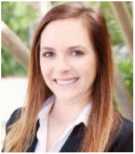
Rachel Carr is a licensed S.C. and NC attorney. She has practiced in real estate, estate administration, estate planning, among other practice areas. Her current role is Privately Held Investments Real Estate Cjficerfor Truist Bank, in the Trust Administration Department.
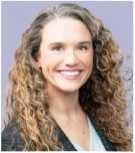
Aliecia Bores is a licensed South Carolina attorney and Senior Vice President, Trust Advisor with Truist Wealth in Mount Pleasant, South Carolina. In her role, she works with individuals and families on estate planning, trust administration, and wealth transfer strategies as part cf a comprehensive approach to wealth and legacy planning.
Rachel and Aliecia are graduates cfthe Charleston School cf Law. Their experience in both legal practice and trust administration inspired this article.
---------
Notes:
[1] South Carolina law allows a drafting attorney to be named as trustee if certain conditions are met. See S.C. App. Ct. R„ Rules of Profl Conduct R. 1.7 &1.8.
[2] "The primary consideration in construing a trust is to discern the settlor's intent. If the language of the trust instrument is plain and capable of legal construction, that language determines the force and effect of the instrument." Pringle v. Mewshaw, Op. No. 2025-UP-182, Appellate Case No. 2022-000682 (S.C. Ct. App. June 4. 2025) (citing Bowles a Bradley, 319 S.C. 377. 380. 461 S.E.2d 811, 813 (1995))-
[3] For purposes of this article, "trustee" and "administrator" are used interchangeably. "Fiduciaries" in this article may refer to an individual or corporate trustee, executor, personal representative, successor trustee or a person and corporation performing substantially the same fiduciary role.
[4] See generally I.R.C. § 2041(b)(1)(A).
[5] See generally S.C. Code Ann. § 62-7-103(20). The "HEMS" provision—referring to distributions for health, education, maintenance, and support—is commonly used in trust instruments. See generally A. Brown. J. Yodis &T. Riter, Understanding the HEMS Standard in Trusts, The Legal Intelligencer (Feb. 3, 2025); https:// www.ballardspahr.com/insights/alerts-and-arti-cles/2025/02/understanding-the-hems-standard-in-trusts: What Is HEMS and What Does It Mean for Trustees?, Gem McDowell Law Group. https://gemmcdowell.com/what-is-hems-and-what-does-it-mean-for-trustees/.
[6] A non-ascertainahle standard provides general guidance to the trustee but is not limited by the health, education, support, or maintenance guidelines outlined in I.R.C. § 2041(b)(1)(A). See generally I.R.C. § 2041(b)(1)(A).
[7] A trustee has a duty of impartiality. See S.C. Code Ann. § 62-7-803.
[8] See generally Restatement Third of Trusts section 50, comment e (Am. L. Inst. 2003).
[9].See Pringle v. Mewshaw, Op. No. 2025-UP-182, Appellate Case No. 2022-000682 (S.C. Ct. App. June 4, 2025) (citing Bowles v Bradley, 319 S.C. 377- 380, 461 S.E.2d 811, 813 (1995))-
[10] See generally S.C. Code Ann. § 62-7-804 (2015).
[11]See S.C. Code Ann. § 62-7-701(b), (c)(1) ("A person designated as trustee who has not yet accepted the trusteeship may reject the trusteeship."). There is no statutorily prescribed method of declination.
---------
Start Your Free Trial of vLex and Vincent AI, Your Precision-Engineered Legal Assistant
-
Access comprehensive legal content with no limitations across vLex's unparalleled global legal database
-
Build stronger arguments with verified citations and CERT citator that tracks case history and precedential strength
-
Transform your legal research from hours to minutes with Vincent AI's intelligent search and analysis capabilities
-
Elevate your practice by focusing your expertise where it matters most while Vincent handles the heavy lifting
