
Judicial Branch
| Citation | Vol. 93 No. 5 Pg. 10 |
| Year | 2024 |
| Pages | 10 |
| Date | 01 October 2024 |
Black Kansas Lawyers Change the World
By Karen Arnold-Burger, Chief Judge, Kansas Court of Appeals
Although Kansas has gone down in history as the state that fought for segregated schools, it is an inaccurate label. The true story of school segregation in Kansas is a history of a state Supreme Court that boldly stood against school segregation in an era when such a position was not popular. And at the heart of the litigation, were Black lawyers, most of whom you have never heard about.
When modern historians talk about the Civil Rights movement, they are usually talking about the period in the United States from 1954 to 1968. The 1954 case of Brown v. Board of Education[1], is one bookend to that tumultuous time and the assassination of Martin Luther King Jr. and the passage of the Civil Rights Act of 1968 is the other. But there was an earlier Civil Rights movement — in which Kansas and its attorneys played a major role. The attorneys who were at the heart of that struggle have long been forgotten — they were not allowed to be members of the Kansas Bar Association or other organized groups of attorneys who might have kept track of their work — so I want to take this opportunity to tell you about some of them.
The first Black lawyer admitted to practice in Kansas was John H. Morris in 1871. From all records, his legal career was brief, but more Black attorneys arrived in Kansas following the Exodusters in 1879 — the first mass migration of Black citizens from the South. During the migration, up to 60,000 people fled, the majority to Kansas.
Black attorneys Joined the migration for two reasons.
First, the large influx of Black settlers meant a book of business would be attainable.
Second, many were convinced that Kansas would be a good place to make inroads in desegregation of schools and public facilities — litigation that had been unsuccessful in both the North and the South. The Black attorneys recognized that Kansas had been settled by people willing to fight for their freedom. Kansas judges and Juries would be made up of abolitionists — people they presumed believed in equality. So William Abram Price (the first Black lawyer licensed in Texas), James Guy (the first Black lawyer to practice in the federal courts in Ohio), George Washington Jones (one of the first black lawyers licensed in Mississippi), Turner Bell and John Waller (among the first from Iowa), John Stuart (from South Carolina Law School), and Charles Henry James Taylor and Albert Martin Thomas (from Michigan Law School), among many others, all came to Kansas from 1879 to 1889.
And they did not waste any time. They immediately filed cases challenging segregation in schools and other public facilities.
Beginning in 1881, there were more reported Kansas cases involving school desegregation than any other state in the union and they were overwhelmingly successful.
The legal landscape that these early Black lawyers arrived to was primarily shaped by an 1877 law specifically allowing cities of the First Class (those with populations of 15,000 or more) to segregate elementary schools. This law remained in effect into the 1950s. Yet apart from Wyandotte High School in Kansas City, Kansas, high schools were never segregated in Kansas — only elementary schools.
The first reported desegregation case in Kansas was filed by a white abolitionist lawyer John DeFord.[2] During the Civil War, DeFord left his practice in Franklin County to fight for the Union under General Grant. In 1880, Deford filed a writ of mandamus against the Ottawa public schools to admit Leslie Tinnon, "a colored boy of school age." Finding the classrooms in the Ottawa schools overcrowded, the Ottawa School Board voted to move all the "colored children" to a building two blocks from the main school and ordered that a "colored" teacher be employed to teach them. While the Board made it clear that the "colored" children were to have an equal quality of education as the white children in the main building, Tinnon sued to prohibit his move into the "colored" school. After a bench trial, the circuit Judge agreed with Tinnon and issued an order prohibiting the move. The Board then appealed to the Kansas Supreme Court.[3]
In the Kansas Supreme Court, the Board argued that a school board has the inherent and statutory authority to dictate the management of the schools, the classification of pupils, and the distribution of teachers. As long as the facilities and quality of education were equal, there was nothing unlawful about placing the "colored" children in a separate school. "Colored" children, it argued, had a statutory right to an education. They did not have a right, either statutorily or otherwise, to go to school in the company of white children. Attorney DeFord argued that there was no statutory authority for the Boards action, and even if there were, its action violated the Equal Protection Clause of the Fourteenth Amendment of the United States Constitution.
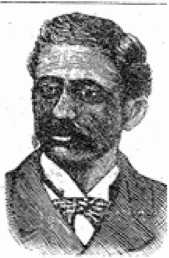
William Price 1847-1893
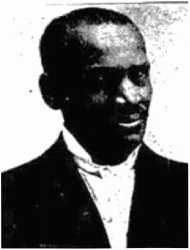
James Guy 1862-1931
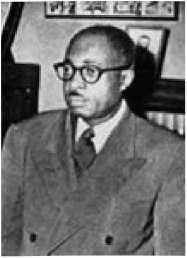
Elisha Scott 1890-1963

Roy Van Dyne 1901-1946
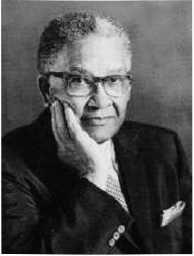
Raymond Reynolds 1905-1995
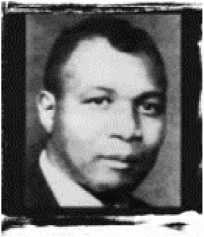
Charles Bledsoe 1898-1972
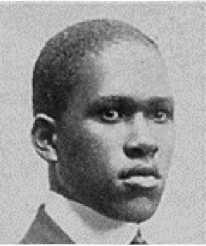
William Bradshaw 1897-1947
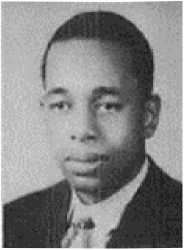
John Scott 1919-1984
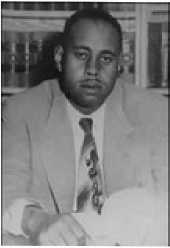
Charles Scott 1922-1989
The Kansas Supreme Court agreed with Tinnon, although not on equal protection grounds. It held that the law governing school boards,[4] required that the Board "'maintains a system of free common schools'" "free to all children residing in such city.'"[5] Elsewhere in the statutes, the Legislature, in 1862, had expressly given cities of the First Class the ability to establish separate elementary schools for whites and "colored." At the time of passage, the legislation only applied to the City of Leavenworth. By the time of Tinnon, two more cities had been brought under the purview of the legislation as cities of the First Class.[6], [7]
The court found that because the authority to segregate elementary schools was not expressly given to cities of the Second Class, like Ottawa, nor was it expressly given to school boards, the Board had no statutory authority to segregate the schools. Although the court relied on the absence of statutory authority to segregate, its thoughts on the issue of segregation in general were clear.
"Is it not better for the grand aggregate of human society, as well as for individuals, that all children should mingle together and learn to know each other? At the common schools, where both sexes and all kinds of children mingle together, we have the great world in miniature; there they may learn human nature in all its phases, with all its emotions, passions and feelings, its loves and hates, its hopes and fears, its impulses and sensibilities; there they may learn the secret springs of human actions, and the attractions and repulsions, which lead with irresistible force to particular lines of conduct. But on the other hand, persons by isolation may become strangers even in their own country; and by becoming strangers, will be of but little benefit either to themselves or to society. As a rule, people cannot afford to be ignorant of the society which surrounds them; and as all kinds of people must live together in the same society, it would seem to be better that all should be taught in the same schools."[8]
The true story of school segregation in Kansas is a history of a state Supreme Court that boldly stood against school segregation in an era when such a position was not popular.
This hardly sounds like the musings of the court of a state that was to become the poster child for school segregation 60 years later.
Ten years later, on virtually identical facts, the court reached the same conclusion in Knox v. Board of Education[9], a case brought by William Abram Price.[10] There the Supreme Court held:
"If the board has the power, because of race, to establish separate schools for children of African descent, then the board has the power to establish separate schools for persons of Irish descent or German descent; and if it has the power, because of color, to establish separate schools for black children, then it has the power to establish separate schools for red-headed children and blondes. We do not think that the board has any such power."[11]
It wasn't until 1903 that a case presented itself involving a city of the First Class. In Reynolds v. Board of Education, [12] the Kansas Supreme Court held that the 14th Amendment to the United States Constitution did not require that the statute allowing cities of the First Class to segregate schools be struck down.
"The fact that laws of this character have been in force for many years in many states and in the District of Columbia, and that no question as to their validity has ever been presented to the supreme court of the United States, discloses a remarkable consensus of opinion on the part of the bar of the country as to the result of such an appeal."[13]
It relied on the recently issued Plessy v. Ferguson.[14] In fact, in Plessy, the United States Supreme Court used school segregation as an example of a valid exercise of the legislative powers of the states. Plessy stood for the principle that as long as facilities and services were equal in kind and quality, separation based on race was not unconstitutional. In other words, the principle of separate but equal was born.[15]
The Kansas statute was, and had always been, very clear that the education provided to all children of Kansas was to be provided equally without regard to color. Therefore, the court always examined the quality of the "colored" schools as compared to the white schools to make sure the education was of equal quality, with equal facilities. Likewise, based on Reynolds and Plessy, in 1906, the City of Kansas City, Kansas, was allowed to...
Get this document and AI-powered insights with a free trial of vLex and Vincent AI
Get Started for FreeStart Your Free Trial of vLex and Vincent AI, Your Precision-Engineered Legal Assistant
-
Access comprehensive legal content with no limitations across vLex's unparalleled global legal database
-
Build stronger arguments with verified citations and CERT citator that tracks case history and precedential strength
-
Transform your legal research from hours to minutes with Vincent AI's intelligent search and analysis capabilities
-
Elevate your practice by focusing your expertise where it matters most while Vincent handles the heavy lifting

Start Your Free Trial of vLex and Vincent AI, Your Precision-Engineered Legal Assistant
-
Access comprehensive legal content with no limitations across vLex's unparalleled global legal database
-
Build stronger arguments with verified citations and CERT citator that tracks case history and precedential strength
-
Transform your legal research from hours to minutes with Vincent AI's intelligent search and analysis capabilities
-
Elevate your practice by focusing your expertise where it matters most while Vincent handles the heavy lifting
