
Chapter 8 Dancing with Antaeus
| Library | From the Trenches II: Mastering the Art of Preparing Witnesses (ABA) (2017 Ed.) |
You don't win a trial with their expert. You win a trial with yours. So why is it that we spend so much time talking about the art of cross-examination and so little time talking about the science of direct examination? Yes, lawyers at cocktail parties brag that the direct examination of an expert is "like dancing," but they don't tell you what kind of dance, and they don't tell you anything about your dance partner.
Well, there is good news and bad news about your dance partner. The bad news is that many experts resemble Antaeus from Greek mythology. They know they are "giants" in their respective fields. They think they are half-god. They would rather kill a lawyer than dance with one. And they only remain invincible while they keep their feet on the ground. The good news is that a tango with a homicidal giant is exactly what jurors what to see.
Times have changed. Jurors are suspicious of trial lawyers and their handpicked experts. They do not want to hear your expert, in response to every question you ask, reply "that's absolutely correct, counselor!" They want a real conversation, and the last thing that lawyers and their experts should give them is a rehearsed or choreographed performance.
We need to rethink our approach to direct examination of experts or it will always be the most predictable, boring, and ignored part of trial. Toward that end, here are 12 rather unusual (often counterintuitive) questions to ask your expert during trial preparation—questions that represent a very different approach to direct examination:
• How can we make this more complicated?
• Why are you just sitting there?
• Who told you that you're funny?
• What is a good mistake I can make?
• What are they right about?
• What does the book say?
• How can we make their case better?
• What you got that theirs ain't got?
• What do you do all day?
• What are you really an expert in?
• Does Google agree with you?
• What do you have to say for yourself?
Forget everything you've been told about direct examination of an expert. Ask these unusual questions of your expert during trial preparation, and use what you learn during your direct examination. Help your expert grab the jury's attention, earn the jury's trust, and teach the jury what they need to know. Prepare yourself to tango with a homicidal giant, and prepare your expert to win the trial.
Conventional wisdom says to "Keep It Simple Stupid." In general, that's good advice, and the acronym (KISS) is certainly easy to remember, but lawyers can forget the reason behind the rule and make the mistake of only presenting the simplest explanation or the simplest exhibit. Those lawyers can learn the hard way that, by "dumbing down" the material, you can unintentionally "dumb down" your expert and "dumb down" your argument. Or worse, you can commit the cardinal sin of appearing to talk down to your jury.
Jurors know more about science and medicine and everything than at any other time in history. They know there is more to the story, and they will be suspicious of your expert's folksy explanation. They do not want your expert to take the stand and read them Shakespeare for Dummies. They want your expert to take the stand and read them Shakespeare in the original Elizabethan dialect . . . and then read them Shakespeare for Dummies.
Every trial-prep meeting should start by asking your experts how they would explain the most critical concept or opinion: (1) to their most learned peers; (2) to college students studying in their field; and (3) to their next-door neighbor. Ask the expert to create demonstrative exhibits for each of the three audiences.
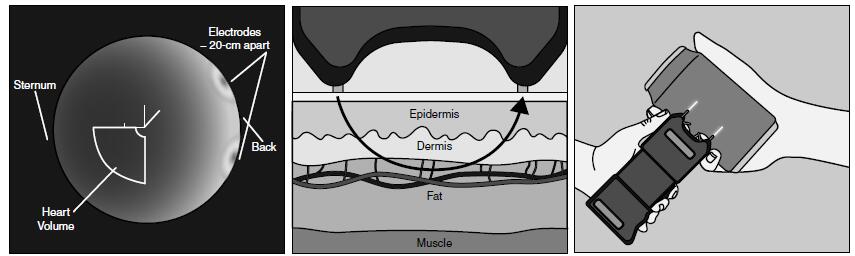
Figure 8.1 "He's smart." Figure 8.2 "That makes sense." Figure 8.3 "He's right."
At trial, solicit all three explanations and present all three exhibits. Use the first explanation and exhibit to demonstrate your expert's degree of understanding and experience (i.e., the "he's smart" exhibit). Use the second explanation and exhibit to make the concept more accessible to the jury (i.e., the "that makes sense" exhibit). Use the third explanation and exhibit to convince the jury your expert is correct (i.e., the "he's right" exhibit).
During the State v. Nugent1 manslaughter trial, we had the challenge of explaining to Winn Parish (Louisiana) jurors the path of electrical current during a drive-stun by a TASER® Conducted Electrical Weapon (CEW). Contrary to what the opposing expert said, the current did not travel all over the body like lightning. It only traveled between the two contact points at the tip of the device, and it did not travel very far beneath the skin. When we met with our expert in bioelectricity, we asked him to show us the most accurate exhibit, and he showed us a finite element model (Figure 8.1)—which looked a lot like an atmospheric infrared image of earth and a little like the Imperial Death Star. We asked him for a simpler explanation, and he showed us a simpler visual graphic depicting the layers beneath the skin and using arrows to identify the path (Figure 8.2). But what we found the most persuasive was our expert's willingness to nonchalantly drive-stun a metal soda can while holding the metal soda can (Figure 8.3).
At trial, we provided the jury with all three explanations and we showed the jury both exhibits and the demonstration. During the next break, the bailiff walked-up to us and said, "I figured you were right for the past week, but I didn't really get it until I saw that can." Lesson learned.
Conventional wisdom says that an expert should take the stand and remain there until dismissed, but the days of listening to Abraham Lincoln and Stephen A. Douglas debate for hours are long gone. Jurors have shorter attention spans and are more visual learners. They crave movement and they need visual reinforcement. So do not just ask your expert to describe the location of L5-S1 on the lumbar spine. Tell your expert to stand-up and point to it on a model of the lumbar spine or on an MRI or on your back (or all three).
Make sure to practice your demonstrations with your expert. Do not just warn your neurosurgeon that you "may" ask him to stand up and point to the herniation on an MRI. Do not just "agree" that your accident reconstruction expert will stand up and draw the accident site for the jury. Tell your expert you are a visual learner and you need your expert to "show you" during the meeting. Never take the chance that you will blow up the wrong image (i.e., axial instead of sagittal MRI view), that your expert's drawing will omit a critical detail (like a median), or that your expert's handwriting will look like a toddler's.
There is a difference between telling a jury that your witness is a good doctor and showing the jury that your witness is a good doctor. Do not be satisfied telling the jury that your expert has been practicing for 20 years, let them see and hear what 20 years of experience looks like. If a finding from a physical examination is critical (i.e., finding of muscle spasm), have your orthopedic surgeon stand up and demonstrate on you how she routinely administers physical exams. Let the jury see and hear how professional and second nature an examination is for your expert. If a field sobriety test is the key to the case, let the jury see and hear the officer administer one to you. Watching your witness do what your witness does every day reminds the jury that your witness is an expert. Whenever possible, let the jury see your experts doing their job.
There is a reason why students love "show and tell." Do not be satisfied with having your expert explain what was tested, show them. If your expert analyzed a histology slide, let the jury see your witness "expertly" place a slide under a portable microscope, and hear your expert describe the steps involved in the analysis.
During the 2014 wrongful death jury trial in Ward v. Jefferson Parish School Board,2 we faced the legal and emotional challenge of helping jurors determine what caused a child to die while at school. Instead of asking our expert to tell the jury what caused the death, we had our pediatric forensic pathologist bring to trial his microscope, the histology slides of normal heart tissue, several photographs of normal heart tissue found in textbooks (from his office), and the histology slides of the deceased child. During direct examination, we had our expert compare the textbook examples of normal heart tissue with the child's abnormal heart tissue, walk the jury through his process of diagnosing the child with a disease known as Arrhythmogenic Right Ventricular Dysplasia (ARVD), and explain to the jury how ARVD caused the terrible tragedy. Even though the jury still found the school partially liable for failing to monitor the child, one juror told us that our expert's methodical use of the tissue slides and textbooks succeeded in overcoming his personal skepticism about the existence and role of cardiac disease in causing the death.
During the 1999 capital jury trial in State v. Whitten,3 we needed to prove that the defendant killed all four victims and lived with their dead bodies (daily forging checks in one victim's name) until the smell and flies drove him out of the house. But, by the time the bodies were discovered, the bodies were so decomposed that the best way to date the time of death was the age of the maggots that covered them. During our direct examination of our expert in entomology, we had our expert explain how he calculated the gestational period and age of the collected maggots while the jurors passed around a clear container of maggots. That one exhibit drove home to the jury what our entomologist did every day, made the tragic deaths more real, and made certain that our direct examination never became an academic exercise. It kept our feet on the...
Get this document and AI-powered insights with a free trial of vLex and Vincent AI
Get Started for FreeStart Your Free Trial of vLex and Vincent AI, Your Precision-Engineered Legal Assistant
-
Access comprehensive legal content with no limitations across vLex's unparalleled global legal database
-
Build stronger arguments with verified citations and CERT citator that tracks case history and precedential strength
-
Transform your legal research from hours to minutes with Vincent AI's intelligent search and analysis capabilities
-
Elevate your practice by focusing your expertise where it matters most while Vincent handles the heavy lifting

Start Your Free Trial of vLex and Vincent AI, Your Precision-Engineered Legal Assistant
-
Access comprehensive legal content with no limitations across vLex's unparalleled global legal database
-
Build stronger arguments with verified citations and CERT citator that tracks case history and precedential strength
-
Transform your legal research from hours to minutes with Vincent AI's intelligent search and analysis capabilities
-
Elevate your practice by focusing your expertise where it matters most while Vincent handles the heavy lifting
