
CHAPTER 6 - § 6.03
| Jurisdiction | United States |
§ 6.03 KEY DECISIONS ON INHERENT DISTINCTIVENESS AFTER WAL-MART
After the Supreme Court's Wal-Mart decision, some plaintiffs found it difficult to establish that trade dress was inherently distinctive, particularly in cases involving both product configurations and packaging. It seemed that a plaintiff's chances of succeeding on a trade dress infringement claim varied greatly by circuit. Below are two cases that highlight the disparity.
[1]—Yankee Candle—First Circuit
Few cases have addressed the idea of inherent distinctiveness head-on since the Wal-Mart decision. One key case, decided shortly after Wal-Mart, is Yankee Candle v. Bridgewater Candle.107 Yankee Candle, a manufacturer of scented candles, sued a competitor, Bridgewater Candle, for trade dress infringement, claiming trade dress in the overall appearance of its candles and its store displays.108 Yankee Candle offered its Housewarmer line of scented candles, each sharing similar appearance, packaging, and label elements. Yankee Candle sued Bridgewater after they began marketing a similar line of scented candles, which shared similar design elements as the House-warmer line.109
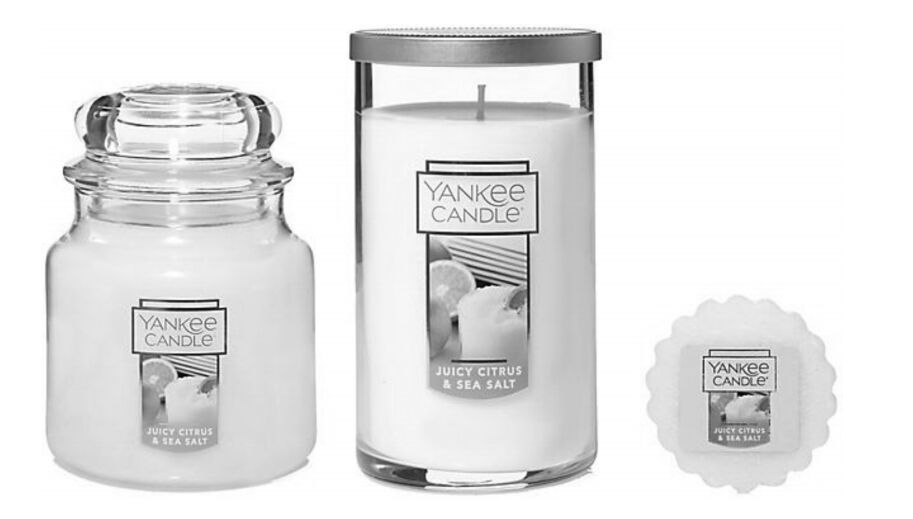
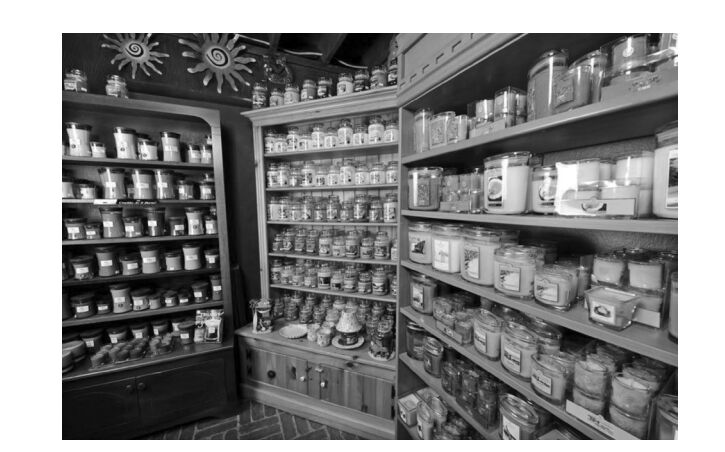
Yankee claimed three different ways that Bridgewater had infringed its trade dress: (1) by copying Yankee Candle's method of shelving and displaying candles in its stores, called the "Vertical Display System"; (2) by copying the overall "look and feel" of Yankee Candle's Housewarmer line of candles; and (3) by copying the design of Yankee Candle's merchandise catalog, specifically its "one fragrance per page" layout.110 The District Court found Yankee Candle's shelf system to be functional and thus ineligible for trade dress protection.111 The District Court then focused on the "look and feel" of the Housewarmer line of candles, and the layout of the Yankee catalog.112 Yankee Candle suggested that its trade dress consisted of
1. The Vertical Display System (shown below)
2. The catalog, with an emphasis on its "one fragrance per page" layout
3. Its candle shapes and sizes
4. The quantities of candles it sells as a unit
5. The Housewarmer labels—specifically, their inclusion of (a) a full-bleed photograph, (b) a superimposed title plate with gold edging and lettering on a white background, (c) a rectangular shape, and (d) a reflective border.113
The district court concluded that both the "look and feel" of the Housewarmer line of candles and the layout of the Yankee catalog were properly characterized as product configuration, not as product packaging.114 This conclusion meant that no aspect of Yankee Candle's trade dress could be inherently distinctive as a matter of law, and thus Yankee was required to show secondary meaning (pursuant to Wal-Mart).115 The district court also found that (1) Yankee Candle had not met its evidentiary burden of showing secondary meaning in its line of candles; (2) that there was no chance of confusion between the respective catalogs; and (3) that there was no likelihood of confusion between the respective candle lines.116
On appeal, Yankee argued that the district court ignored its "combination" claim defining its trade dress as "the combination of its Housewarmer series of labels, its choice of candle sizes and styles, its Vertical Design System, and its catalog layout."117 Yankee contended that the court disaggregated the features of its trade dress, which led to a failure to analyze the "look and feel" of the entire Yankee product.118 Yankee also argued that the classification of the trade dress as a product configuration was incorrect and that it should be permitted to show inherent distinctiveness.119
The First Circuit characterized Yankee Candle's claimed trade dress as comprising two distinct parts: (1) the combination of elements, including the display system, catalog, and candle sizes and shapes, and (2) the elements common to the Housewarmer labels.120 Having defined the trade dress, the Court addressed whether either part was inherently distinctive.121
With respect to the combination of elements, Yankee argued that its candle sizes and shapes, quantities sold, labels, Vertical Display System, and catalog stemmed from "arbitrary" choices and thus were "inherently distinctive."122 Recognizing that the First Circuit was questioning whether the combination of elements was product packaging or product design, Yankee argued:
because [the] products [are] candles, all the trappings associated with the sale of the candle—i.e., the candle-holders, the Vertical Display System, the labels, and the catalog—constitute product packaging, or at the very least a "tertium quid . . . akin to product packaging," categories of trade dress that may be inherently distinctive.123
Although the court recognized that Yankee Candle's Housewarmer labels were product packaging, when the labels were combined with actual candle features, candle containers, the catalog, and the in-store display system, the court found the trade dress claim extended beyond simple product packaging.124 Likewise, the court clarified that this combination claim was not considered to be like the restaurant decor upheld as potentially inherently distinctive in Two Pesos, which the Supreme Court described as a "tertium quid."125 Given that there was no clear bucket into which Yankee Candle's combination trade dress would fit, the First Circuit was forced to decide how to classify the combination:
Yankee has not made a claim as to the overall appearance of an entire store, but has instead isolated certain characteristics of its candle display in stores. This strikes us as far closer to the design/configuration category. The fact that Yankee points to particular aspects of the candles themselves, namely their shapes and sizes, only confirms our categorization.126
The First Circuit's inclination to characterize the Yankee Candle trade dress as product configuration is, of course, a result of direct guidance from the Supreme Court in Wal-Mart, where Justice Scalia stated,127 "To the extent that there are close cases, we believe that courts should err on the side of caution and classify ambiguous trade dress as product design, thereby requiring secondary meaning."128 Ultimately, the First Circuit found that Yankee Candle's claimed trade dress was product configuration and thus that Yankee was required to prove secondary meaning (under the rule set down by the Supreme Court in Wal-Mart).129
The court next turned to the issue of how to categorize Yankee Candle's labels for its Housewarmer line of candles. Yankee argued that the labels all shared unique features and thereby constituted inherently distinctive trade dress.130 However, the district court had found that the labels were product configuration trade dress.131 The First Circuit disagreed, holding that detachable labels are a classic case of product packaging and therefore may be inherently distinctive.132
Once the labels were classified as product packaging, the First Circuit analyzed them using the Abercrombie scale to determine whether they were inherently distinctive.133 The court recognized the difficulty of applying a test designed...
Get this document and AI-powered insights with a free trial of vLex and Vincent AI
Get Started for FreeStart Your Free Trial of vLex and Vincent AI, Your Precision-Engineered Legal Assistant
-
Access comprehensive legal content with no limitations across vLex's unparalleled global legal database
-
Build stronger arguments with verified citations and CERT citator that tracks case history and precedential strength
-
Transform your legal research from hours to minutes with Vincent AI's intelligent search and analysis capabilities
-
Elevate your practice by focusing your expertise where it matters most while Vincent handles the heavy lifting

Start Your Free Trial of vLex and Vincent AI, Your Precision-Engineered Legal Assistant
-
Access comprehensive legal content with no limitations across vLex's unparalleled global legal database
-
Build stronger arguments with verified citations and CERT citator that tracks case history and precedential strength
-
Transform your legal research from hours to minutes with Vincent AI's intelligent search and analysis capabilities
-
Elevate your practice by focusing your expertise where it matters most while Vincent handles the heavy lifting
